


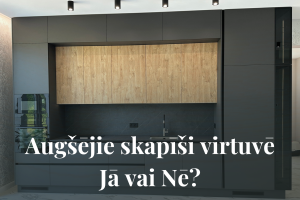
Upper Kitchen Cabinets – Yes or No? Pros, Cons and Alternatives
Upper kitchen cabinets have been an almost standard solution for many years. They can be found in apartment kitchens, private homes, classic interiors and modern kitchen designs. And there is a good reason for that — they provide extra space for dishes, glasses, spices and everyday essentials.
However, in recent years, kitchens without upper cabinets have also become increasingly popular. In some projects, they are replaced with open shelves, while in others — with tall cabinets, a kitchen island or spacious drawers in the lower cabinets. That is why the question is completely reasonable: do you really need upper cabinets in the kitchen?
The answer is not the same for everyone. It depends on the size of the room, cooking habits, the amount of items that need to be stored and the feeling you want to create in your kitchen — practical, light, minimalist or maximally functional.
What are upper kitchen cabinets and why are they chosen?
Upper cabinets are wall-mounted cabinets that are usually placed above the worktop, sink or lower kitchen cabinets. They are part of the overall kitchen furniture solution and help make use of wall space that would otherwise often remain empty.
Most often, they are chosen to gain more storage space. They can be used to store plates, cups, glasses, tea, coffee, spices, dry food products or small kitchen accessories.
This is especially important in small kitchens, where every centimetre matters. If the room does not have a pantry, island or spacious tall cabinets, upper cabinets can be a very practical and even necessary solution.
Advantages of upper kitchen cabinets
More storage space
The main reason people choose upper cabinets is the additional storage space. In everyday life, more items accumulate in the kitchen than it may seem at first — dishes, cups, bowls, food packaging, spices, coffee capsules, baby bottles and much more.
If the kitchen is used actively for cooking, there is usually no such thing as too much storage space. Upper cabinets help keep everything in its place instead of leaving items on the worktop.
Better use of wall space
Kitchen walls are often valuable space. If they are not used, especially in a small room, it can feel like there is not enough storage, even though part of the room’s potential remains unused.
Wall-mounted kitchen cabinets allow you to use the vertical area practically. This is especially useful in narrow kitchens where there is no option to create a large island or an additional row of cabinets.
Suitable for small kitchens
In a small apartment kitchen, upper cabinets are often one of the best ways to achieve functionality. If the lower cabinets need to accommodate a waste sorting system, dishwasher, pots and pans, the upper area becomes very useful.
For example, in a small two-room apartment without a pantry, upper cabinets can be used to store food products, glasses and everyday dishes, while the lower cabinets can be reserved for heavier items.
A way to hide everyday items
Not everyone likes open shelves where everything is visible. Even beautiful dishes can create visual clutter over time, especially if the kitchen is connected to the living area.
Closed upper cabinets help maintain order. Behind the fronts, you can hide everyday dishes, products and items that do not always need to be on display. This is especially convenient if you want a calm, clean and well-organised kitchen design.
A unified and classic kitchen furniture look
Upper cabinets help create a complete and cohesive kitchen interior. They can be the same colour as the lower cabinets or, on the contrary, lighter, so the kitchen feels more open.
In a classic kitchen, upper cabinets often create a balanced and cosy feeling. In a modern kitchen, they can be designed with smooth fronts, hidden handles and a calm colour palette.
Ceiling-height cabinets help prevent dust build-up
One of the most practical solutions is cabinetry that reaches the ceiling. If a gap is left between the top of the cabinets and the ceiling, dust and grease deposits usually accumulate there. This area is not easy to clean, so it is often forgotten.
By building cabinets up to the ceiling, the kitchen looks more unified, cleaner and visually higher. In addition, the upper shelves can be used to store items that are used less often, such as festive tableware, vases or seasonal accessories.
Disadvantages of upper kitchen cabinets
The kitchen can look heavier
Although upper cabinets are practical, they can make the room feel visually heavier. This is especially noticeable in small or narrow kitchens where cabinets take up a large part of the wall.
If the fronts are dark, bulky or placed on both sides of the kitchen, the room may feel more enclosed. In such cases, lighter colours, glass elements or a partial solution where cabinets are placed only in one area can help.
Upper shelves can be harder to reach
Not everyone finds it convenient to reach the upper shelves. This is especially true for ceiling-height cabinets. Items used every day should be placed at an accessible height, while the highest shelves should be reserved for things that are needed rarely.
For example, everyday cups and plates are better stored on lower or middle shelves, while festive dinner sets can be placed higher up.
Small or dark rooms can lose their sense of spaciousness
If the kitchen has little natural light, upper cabinets can create an even more enclosed feeling. This does not mean that you definitely need to avoid them, but kitchen planning in such cases should be done especially carefully.
A good solution can be light-coloured fronts, lighting under the cabinets or an open area near the window so that the room does not feel too crowded.
Poorly placed cabinets can get in the way
It is important not only whether the cabinets are there, but also how they are positioned. If they are too low, too deep or placed at the wrong distance from the worktop, they can make cooking less comfortable.
A person should be able to work comfortably at the surface, lean over the sink and use household appliances without difficulty. That is why custom-made kitchen furniture is a valuable solution — it can be adapted to a specific person, room and everyday habits.
Taller cabinets can increase costs
Ceiling-height cabinets or specially customised upper modules usually cost more than standard solutions. The price may increase due to materials, fittings, installation complexity and the specific features of the room.
However, the most expensive solution is not always necessary. Sometimes well-planned standard-height cabinets or a combined solution are enough.
When are upper cabinets a good solution?
Upper cabinets will be especially practical if the kitchen is small and every wall needs to be used efficiently. They are also useful for families with many dishes, children’s items, food products and cooking tools.
They are a good solution if the home does not have a pantry or a separate utility area. In such a situation, the kitchen has to take on a larger storage function.
Upper cabinets are also suitable for people who want a minimalist sense of order. If everything is hidden behind cabinet fronts, the kitchen looks calmer and tidier, even when it is used frequently for cooking.
They are especially practical in families where the kitchen is not just a beautiful interior element, but an active work zone for breakfasts, dinners, children’s lunch boxes and weekend cooking.
When can you manage without upper cabinets?
A kitchen without upper cabinets can be an excellent choice if the room is spacious and already has enough lower cabinets. If there is a kitchen island, tall cabinets or a pantry, the upper wall area can remain more open.
This type of solution often appeals to those who want a lighter, more modern and more open interior. It works especially well in kitchens connected to the living area, because the furniture dominates the room less.
You can also manage without upper cabinets if you do not want to fill every wall with furniture. For example, one wall can have only lower cabinets and a beautiful wall panel, while the main storage is placed on the opposite side in tall cabinets.
Alternatives to upper kitchen cabinets
Tall cabinets from floor to ceiling
Tall cabinets are a very practical alternative. They can be used to integrate a refrigerator, oven, microwave, pantry area or shelves for dishes.
They help concentrate storage in one place, leaving the rest of the kitchen visually lighter.
Open shelves
Open shelves create a freer and cosier feeling. They can be used for beautiful cups, spice jars, cookbooks or decorative items.
However, it is important to remember that open shelves collect more dust, and any disorder is immediately visible. They are better suited for people who enjoy maintaining visual order.
Kitchen island with additional storage
If the room allows it, a kitchen island can be a very valuable solution. It provides additional work surface, space for drawers and sometimes also seating.
An island can partly replace upper cabinets, especially in spacious kitchens.
Deeper drawers in lower cabinets
Modern drawers are very convenient. They make it easy to see the contents, and you do not need to reach deep into a cabinet to find a pot or lid.
Deep drawers are suitable for pans, pots, bowls, food supplies and even dishes.
Built-in pantry or utility cabinet
If possible, a pantry is one of the most convenient solutions. It can be used to store food products, household chemicals, small appliances and items that are used less often.
This allows the kitchen to remain visually cleaner and less overloaded.
Combined solution
Often the best option is not a strict “yes” or “no”, but a middle ground. For example, one wall can have upper cabinets, while another has only lower cabinets or open shelves.
This makes it possible to keep storage space while maintaining a lighter overall impression.
Glass or light-coloured fronts
If upper cabinets are needed but you do not want the kitchen to feel heavy, you can choose light-coloured fronts or glass elements. They visually lighten the kitchen design and help the room appear more spacious.
Cabinets up to the ceiling – a good compromise or too much?
Ceiling-height cabinets are a very practical solution if you want to make maximum use of the space. They provide more storage, prevent dust from collecting above the cabinets and create a unified, finished kitchen furniture look.
Visually, this solution can make the room feel higher, because the eye is drawn upward. It looks especially good when the fronts are in a calm tone and there are not too many small details.
However, there are also disadvantages. These cabinets usually cost more, the upper shelves are harder to reach, and it is not always possible to build them due to utilities, ventilation or uneven ceilings.
Practical tip: use the highest shelves only for items you use rarely — festive tableware, seasonal decorations, spare textiles or larger dishes for entertaining guests.
How to make the right decision?
Before choosing kitchen furniture, it is worth honestly answering a few questions:
How many items need to be stored in the kitchen?
How often do you cook at home?
Is the kitchen small or spacious?
Is maximum functionality or visual lightness more important?
Does the home have a pantry, island or other storage areas?
Will you value practicality or minimalist design more in everyday life?
For example, for a family with children who cook every day, upper cabinets in the kitchen will often be very useful. On the other hand, for a couple living in a spacious home with a separate pantry, lower cabinets, an island and a few tall cabinets may be completely sufficient.
That is why kitchen planning is not only a question of beautiful fronts. It is about everyday convenience for many years to come.
Summary: should you choose upper kitchen cabinets?
There is no single correct answer. Upper cabinets are very practical if you need additional storage space, the kitchen is small or you cook often in everyday life. They help maintain order and make full use of the wall area.
At the same time, a kitchen without upper cabinets can be an excellent choice if the room allows it and there are other storage options. It can look lighter, more modern and more open.
The best solution is often an individually designed kitchen that is adapted to a specific room, the user’s height, habits and the number of items that need to be stored. That is why custom-made kitchen furniture makes it possible to achieve a balance between practicality, design and long-term comfort.
Want to understand which solution is right for your kitchen?
If you are planning a new kitchen or custom-made kitchen furniture, we can help you evaluate whether your space needs upper cabinets, ceiling-height cabinets, an island or a combined solution.
Contact us to create an individual kitchen furniture project that is convenient for everyday use, carefully planned down to the smallest details and tailored specifically to your home.
Submit your furniture project – HERE